Consider the previous occasion when your automobile would not start in the cold morning. Or when a caution-light flashed on, and disappeared, and then reappeared three days later without apparent cause. Nine times out of ten the guilty party is not a dramatic mechanical failure: rather, it is something much less dramatic: a bad electrical connection.
In a great number of aspects, modern cars are computers on wheels. A typical car nowadays has between 1,500 and 2,500 individual wires in it, and luxury and electric cars have even more. All the sensors, actuator, display, and safety systems rely on clean, neat electrical signals. Once such connections wear out or break down, it affects the whole vehicle not only in an inconvenient manner but at times in a life-threatening manner as well.
The Hidden Backbone of Every Modern Vehicle
The majority of individuals consider automotive engineering as engines and transmission. However the electric layout that the car is powered by is equally important – perhaps even more important.
Critical systems that rely on electrical impulses include:
- Braking mechanisms
- Deployment of the airbags
- Timing of fuel injection
- Power steering assistance
None of them operate on mechanical connections anymore. They operate based on electrical impulses and these impulses should reach the appropriate location, at the appropriate time and without failure.
Any malfunction on that chain presents resistance. Resistance generates heat. Insulation is destroyed by heat, metals are oxidized and connectors are further loosened. It is a creepy, compounding type of failure mode that may be devilishly difficult to diagnose since it usually presents itself as an intermittent fault – a fault that occurs as soon as a technician connects a diagnostic device.
Good connections do not entail any of this. They are:
- Not easily broken even when under vibration, temperature changes, and when exposed to moisture.
- Resistant to corrosion.
- Current conducting, waste free and heat free.
- Durable for years, not months.
Why Connection Quality Matters More Than Ever
The electric cars have made electrical engineering the centre of the automotive design in a manner that was unbelievable even ten years ago. Nevertheless even more traditional combustion engines are now much more electrically complicated. ADAS, infotainment, camera networks, and hybrid powertrains are the ones that require solutions to be wired, that are lighter, more reliable, and more carefully engineered than anything that has ever existed.
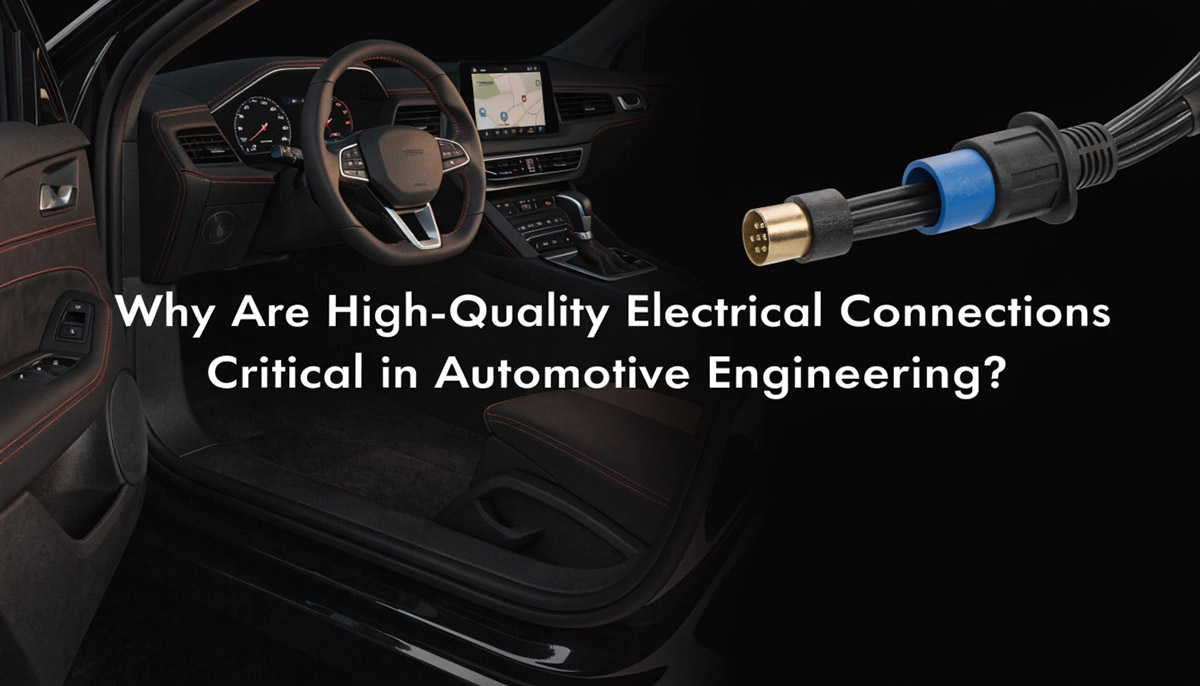
Here is where the design and construction of the wiring infrastructure on a vehicle would become very important. A well-designed Custom wiring harness built specifically for a vehicle’s unique layout, power requirements, and environmental conditions can make the difference between a system that performs flawlessly across a vehicle’s lifetime and one that generates persistent, hard-to-trace faults.
Ready-made systems and solutions do not always work in challenging applications. Racing cars, special purpose trucks, emergency response trucks, and electric conversions have uniquely different needs that need unique strategies. The connector types, wire gauge, routing and strain relief are not only correct but also essential to safety.
The True Cost of Cutting Corners
There is some very alluring reasoning behind it when it comes to cutting costs in automotive manufacturing: employ cheaper connectors, thinner wire insulation, fewer protective mechanisms. The savings appear real in the short-run. They are a delusion in the long run.
- Diagnostic Expenses: Electric failures are one of the expensive to diagnose and fix especially when they are intermittent. It can take a technician a couple of hours to track down a ghost fault to the replacement of sensors, control module reflashing, ground checking only to discover that a terminal that was previously corroded was the root cause of the whole issue.
- Warranty Claims: In the manufacturing, electrical and warranty claims in electrical problems are often among the most expensive categories.
- Safety Risks: Then there is the safety aspect, which is beyond cost. Wire malfunctioning is among the most common causes of vehicle fires. Weak links in safety-related systems such as anti-lock brakes, electronic stability control, collision avoidance will result in life-threatening scenarios that drivers are unaware of until it is too late.
Engineering for Reliability: What It Actually Takes
Creation of electrical connection that will stand up to decades of usage must be a multidimensional affair.
Material Selection
The choice of material is very important. Copper is used as the standard due to its conductivity and flexibility; however, the alloy content, number of strands, and plating on connectors all have an impact on long-term operations. Connector pins, e.g., plated with gold and tin, do not oxidise as bare metals do.
Environmental Protection
Protection of the environment is also important. Wheels wells, engine bays, and places under the body are always exposed to water, road salt, extreme temperatures, and vibration. Proper routing is not a luxury add-on that happens to provide sealed connectors, proper strain relief and protective conduit routing is a basic requirement.
System Level Design
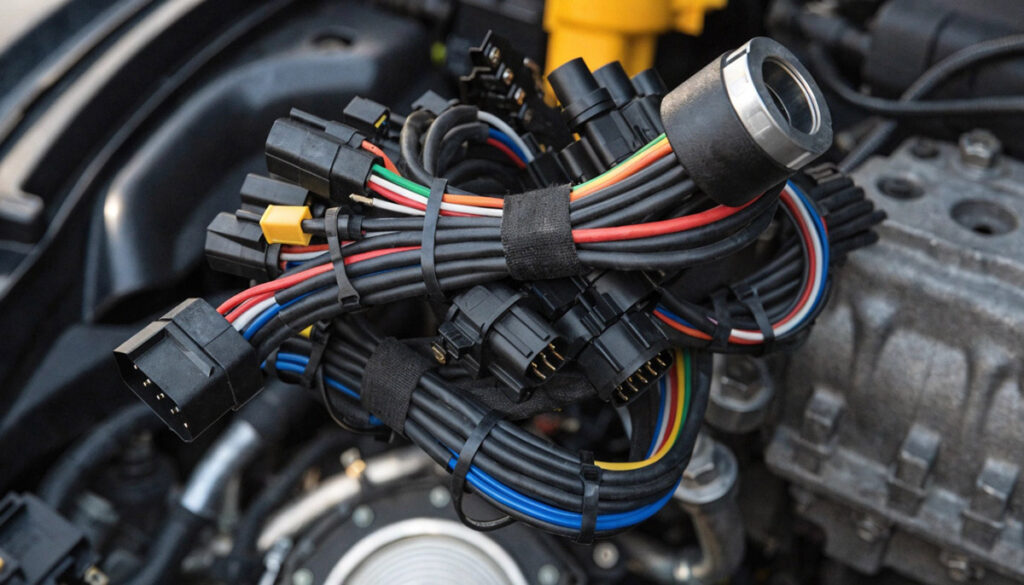
Everything is connected at the system level design. A thoughtfully engineered Automotive Wire Harness organizes conductors efficiently, minimizes electromagnetic interference between signal and power lines, routes wiring away from heat sources, and simplifies future maintenance. It is the sort of thing which you can see through when well, and the sort of thing which makes you scream when in bad taste.
The Long View
That is why the most reliable cars on the road are those that still sputter at 200,000 miles and have a strong well-designed electrical system. It’s not accidental. It is the result of intentional decisions at the initial stages of the design process concerning the quality of connections, materials, and protection.
With the increasingly complex nature of vehicles and electrification, the stakes surrounding electrical engineering will keep rising. There is more power, more data, more safety critical systems, all that is flowing through wires and connectors and they must work, every single time, without failure.
Good electrical connections are not some luxury or some engineering nicety. They are the basis on which all other things rest. Once they are correct, the rest of the vehicle stands a fighting chance. Misuse them and all the elaborate software and hi-tech hardware will not be able to rescue you.
To any person engaged in designing a vehicle, modifying or maintaining it, it is not optional but it is necessary to know this.