The contemporary cars are moving computers. Amid advanced driver assistance systems, adaptive cruise control, collision warnings and in-cabin electronics, the current automobiles are dependent on electrical architecture in a manner that would have been truly remarkable even ten years ago. With complexity comes a frightening fact that when the electrical system collapses so does the safety associated with it.
The good news? This has increased the number of tools and techniques that manufacturers can employ. What is really difficult is to tell where to pay attention.
In This Article:
Why Electrical Design Is Now a Safety Issue, Not Just an Engineering One
It is tempting to envision vehicle safety as something as mechanical as the brakes, crumple zone and airbags. However, consider what actually causes those airbags:
- Sensors
- Wires
- Control modules
- Sending signals within a second
Provided any segment of such electrical chain is faulty, the physical protection it regulates may never come off.
This is true with steering assistance, traction control, automatic emergency braking and lane departure warnings. These systems rely on pure and continuous electricity communication. The loose ground connection or broken sensor line is not a mere inconvenience, it is a liability.
Manufacturers that consider electrical design a secondary task, something that can be sorted out after the mechanical platform has been resolved, always get into avoidable issues. They are those that incorporate electrical architecture at the earliest design phases, and thus, create safer and more reliable vehicles.
Building for Harsh Environments from Day One
Vehicles don’t live in a lab. They can take vibration, thermal cycling, road salt, humidity, and the occasional puddle of the flood level. The components need to withstand all of it, and that implies that they need to be designed based on the real world and not on ideal conditions.
Another solution that manufacturers have developed is on how to shield wiring and connectors against moisture and contamination. A well-designed Waterproof Cable Harness can be the difference between a system that operates reliably for the life of the vehicle and one that starts throwing fault codes the moment it encounters wet weather. This is not only applicable in the off-road or heavy-duty usage but passenger cars in the rainy seasons experience such conditions all the time.
Key Implementation Strategies:
- Proper sealing at all connection points.
- Routing the harnesses out of the area of water ingress.
- Ensuring that where the harness leaves a sealed box, the seal itself is by nature of conditions it will meet.
Such decisions are made at the initial stages of the design process and they are costly to alter at a later stage.
Precision Placement of Electronic Components
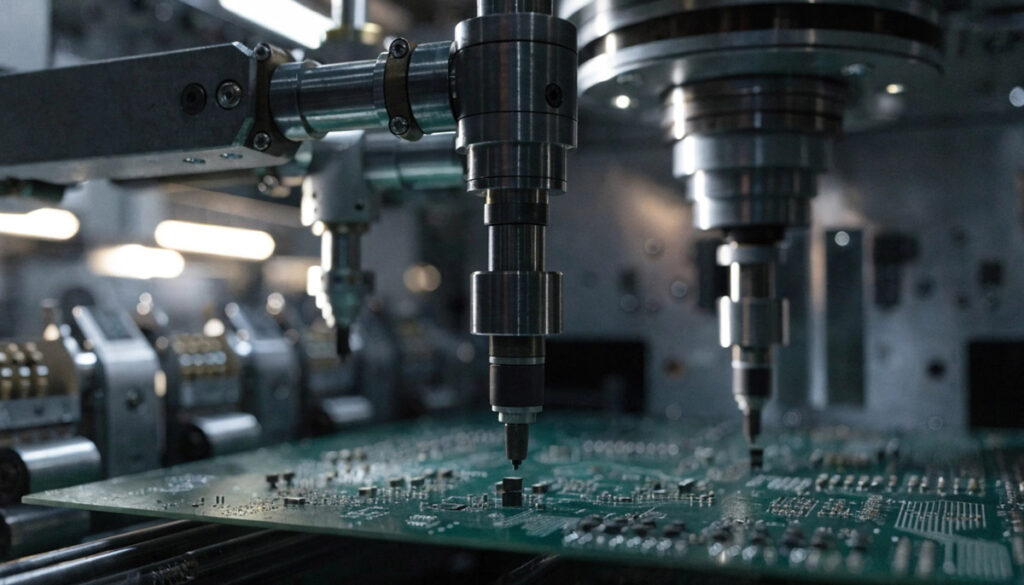
The increasing number of electronic control units, sensors, and microprocessors integrated in a smaller area on vehicles makes the layout and solder of components on circuit boards more important. SMT mounting surface-mount technology has become the standard for automotive PCB assembly because it allows components to be placed with high precision and at scale, while also being better suited to the vibration environments that automotive electronics must endure.
The difference between safety-grade electronic assemblies and consumer-grade ones does not lie in the components themselves, but the difference in quality of the process. This includes:
- Automated optical inspection
- Controlled reflow profiles
- Tedious post-assembly testing
In any safety-critical system, a marginal solder joint that may have a lifetime of a number of years in a laptop is unacceptable when it is on an ABS controller.
Redundancy: The Underrated Safety Tool
Mechanical engineers have appreciated the importance of redundancy long enough. The same reasoning is being put into practice by electrical designers.
In fly-by-wire airplanes, there are multiple independent channels with critical systems that will step in case of failure. Luxury cars are beginning to use the same reasoning in steering and braking systems, especially with the development of autonomous driving technology. Redundancy of power, independent signal paths, fail-safe defaulting is coming into the automotive design, and not a moment too late, out of the aerospace world.
Basic Redundancy Concepts:
- Fusing critical circuits individually.
- Making ground paths non-coincidental.
- Arranging control modules to wind up in a safe state instead of an unforeseeable one when an anomaly is detected.
Designing with EMI in Mind
One of such issues is electromagnetic interference (EMI) which usually does not manifest itself until the time when vehicles are on the field. An overlaid wiring harness will inject noise into a sensor signal. Such noise could appear as a ghost fault, or worse, be an intermittent fault in a safety system which is virtually unrepeatable in a workshop.
Electrical design is foreseeing interference. It implies:
- Intelligent routing of harnesses.
- Appropriate shielding where necessary.
- Filtering at the inputs of sensitive control modules.
- Testing in actual electromagnetic conditions, rather than ideal power supply bench testing.
Communication Protocols and Software Integrity
Later automobiles use communication within the vehicle in buses such as CAN bus, LIN, and more recently Ethernet. All these have failure modes and the software that decodes those signals further complicates the whole issue.
Producers who enhance the safety of vehicles by making them electrically designed cannot end at the hardware. Software to process sensor inputs, observe system conditions and cause safety interventions should be:
- Well-tested and robust.
- Capable of responding gracefully to unforeseen inputs.
- Designed so a sensor with an out of range value does not crash the system, but triggers a predictable safe action.
The Bigger Picture
Making vehicles safer by developing better electrical design is not a one-yes or no. It is about applying the same caution in dealing with the electrical system that has long been the practice in mechanical systems, designing to fit the environment, creating redundancy, testing, and never thinking that something will work simply because it worked on a bench.
Whether consciously or unconsciously, the manufacturers of these vehicles made these choices early, purposely and without compromise, it is almost always true that the vehicles that gain reputations of reliability and safety. It is that discipline, and not an individual component or technology, that makes the difference.