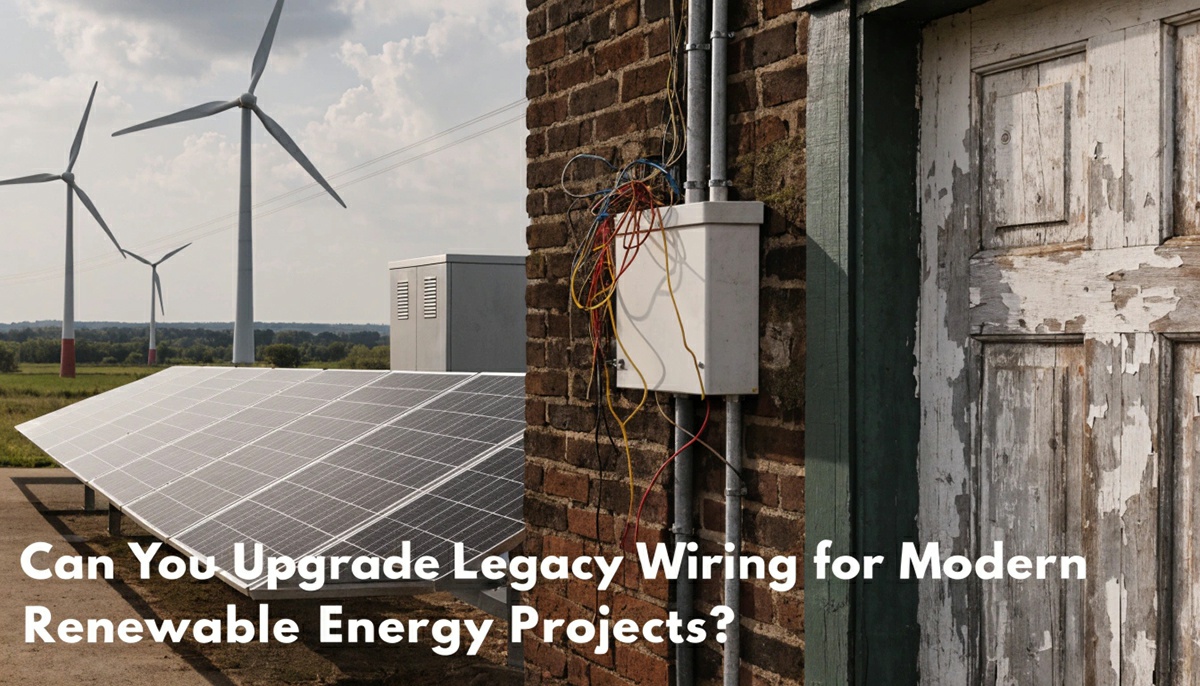

When your home or building was old, it was likely wired several decades ago, and you likely ask yourself whether all that infrastructure that exists can really support a solar array, a battery storage system, or an EV charger. It is a reasonable question and the honest answer is: sometimes yes, sometimes no, and almost always “it depends on what’s already there.”
We will go through the actual process of what is actually involved when legacy wiring needs to be adapted to modern renewable energy.
Why Old Wiring Wasn’t Built for This
Most older homes and commercial buildings were designed with electrical systems that do not support the idea of rooftop solar, large battery banks, and two-way flow of energy. The house that was wired in the 1970s or 1980s was designed to meet a relatively predictable one-way load including the power that would be received, would power your lights and appliances and that was it.
Green energy systems reverse that paradigm:
- Solar Panels: The electricity produced is fed back through your system and it may be sent to the grid.
- Battery Storage: Relies on demand charge and discharge.
- EV Chargers: Draw sustained high amperage hours.
Old wiring, fuses and the layout of panels just were not made to be like any of that. It does not mean that your old wiring can no longer be used—but it does imply that before you fit anything a careful review is essential.
What Actually Gets Evaluated During an Upgrade
When an electrician or renewable energy installer visits your existing infrastructure, they are making a number of checks simultaneously.
Panel Capacity
The first one is panel capacity. Older panels can be rated at 100 amps or lower. Almost all renewable energy installations – particularly when it combines solar, battery storage and EV charging – desire a 200-amp or greater service. One of the first things to upgrade is the panel, and it is better to upgrade the panel than to add everything in a box that is smaller than it should be.
Wire Gauge and Insulation
The condition of the wire gauge and insulation is important. Aluminum wiring of some times can be a true menace—it swells and shrinks unlike copper, making loose connections as time goes by and increasing the danger of fire. The insulation on older wiring may fail as well, crack or merely fail to comply with current code on the loads you are planning to carry.
Grounding and Bonding
Older buildings frequently do not have a grounding and bond system that is up to modern standards. Solar inverters are sensitive to the quality of grounding, especially renewable energy systems. It is not only a code issue because a poor ground can lead to system failures, reduction of performance, and safety issues.
Where Purpose-Built Components Make a Real Difference
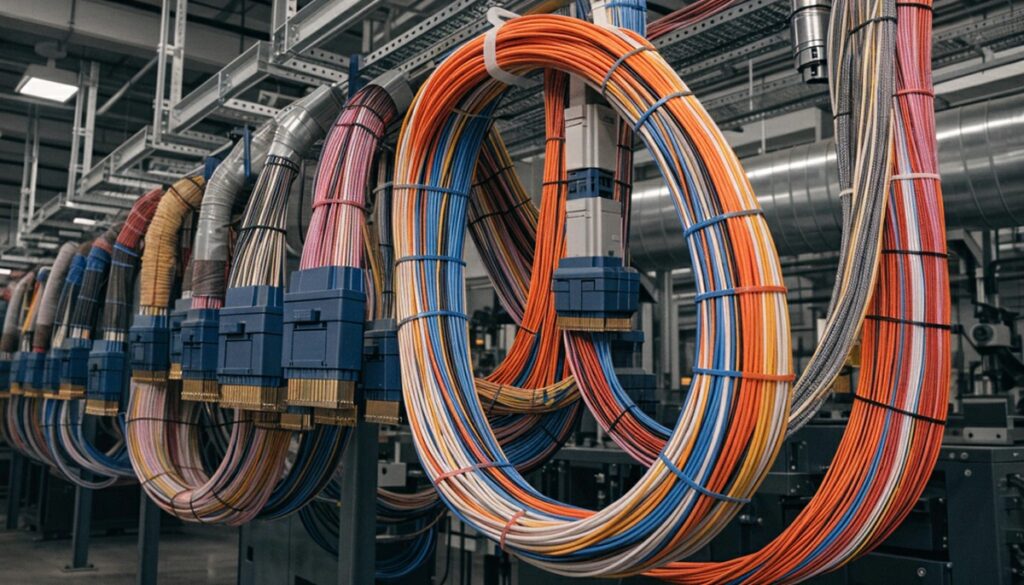
The only thing that people fail to consider is how the main panel work differs to the component level that goes on throughout the system. It is the quality of the wiring and connectors in the building, rather than the quality of the panel, that will be of critical importance when adding solar, battery storage or EV infrastructure to an existing building.
- Outdoor Installations: In outdoor or exposed installations—think rooftop conduit runs, ground-mounted arrays, or EV charger pedestals—Waterproof wire harnesses are essentially required. They are resistant to moisture intrusion, UV sunlight, and temperature extremes that are caused by outdoors settings throughout the year.
- System Assemblies: Likewise, the wiring and assemblies that tie your inverter, charge controller and battery bank together aren’t places to cut corners. High precision cable assembly in these areas ensures consistent electrical contact, proper impedance matching, and long-term reliability all of which affect both the safety and the performance of your system.
A common error is the use of standard interior-grade wiring when these applications are used and results in premature failure and possible hazards. A sloppy or unsealed connection in a high current DC circuit is severe.
When Partial Upgrades Are Realistic
Not all the projects need to be rewired. An aggressive strategy is effective in most instances.
Unless the wiring of the branch circuits throughout the house is badly deteriorated, then, a simple panel upgrade and a new dedicated circuit or two may be all you need to maintain your undersized panel. That’s a manageable project. Conversely, where the house has knob-and-tube wiring or ungrounded outlets everywhere, a more thorough method is almost always safer and cheaper in the long term.
Commercial buildings tend to have more flexibility since the wiring is usually in conduit implying that separate conductors could be substituted without hacking holes through walls. It is a great benefit in the case of adding distributed solar over a large roof or combining building-level energy storage.
Permitting and Code: Not Optional
It does not matter which approach you use. Installations of renewable energy are also inspected in almost all jurisdictions and the issues of the wiring of the older systems that may not have been identified by your installer will be flagged by the inspector. In other instances, updating an older system to the current code is a requirement to approval, which is actually a good thing, even though it may cost more in the short term.
You will save yourself headaches by employing a licensed electrical contractor that has a particular experience working on installations of renewable energy but not just in general residential work. They will understand the local needs, what your utility is doing with regard to interconnection, and will identify the compatibility problems that some less knowledgeable users of these systems may not identify.
The Bottom Line
Legacy wiring isn’t automatically a dealbreaker for renewable energy projects, but it’s rarely a free pass either. The point is that you have to be of an honest evaluation in advance of a system design. Be aware of what you have, what your system requires and budget the upgrades which your infrastructure really requires.
The good news? When done well, the improvements you make today do not only accommodate the current solar or storage system, but they future-proof your building to whatever you do next. And in a world where energy technology is moving fast, that’s genuinely worth something.